Product
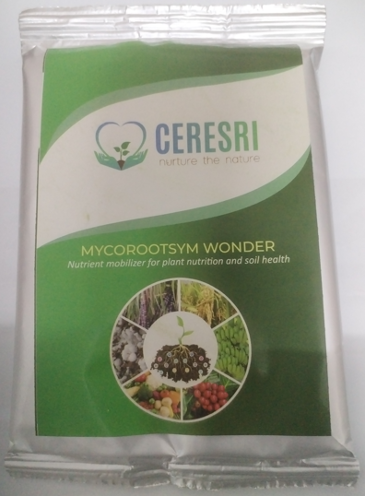
Mycorrhiza – Mycorootsym Wonder
WhatsApp Contact
Introduction
Arbuscular Mycorrhizal fungi, also known as endomycorrhiza, lives in symbiotic relationship with plant roots. More than 90% of agricultural crops (with the exception of crops in Brassicaceae family (cabbage, broccoli, kale), Chenopodiaceae (spinach, beet root), plants in mustard family, carnation etc) can be immensely benefitted by the association of mycorrhizal fungi. MYCOROOTSYM WONDER contains active spores and propagules of effective strains of mycorrhizal fungi. Inoculation of MYCOROOTSYM WONDER to the root zone of growing plants lasts for the life of the plants.
For perennial and tree crops, we recommend application of MYCOROOTSYM WONDER every year, whereas for annual crops like cereals, vegetables etc one application during the early growth stage would suffice.
Product Information
Quality Standards: 2000 infective porpagules/g of the product
Dosage: 250g/ha
Shelf Life: Two Years
Packing Quantity: 100g
Product Desciption
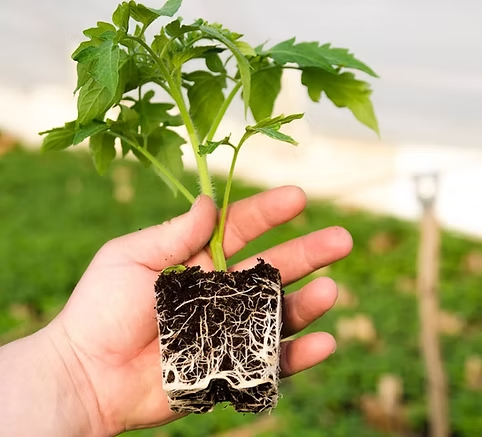
Mycorootsym Wonder contains the consortium of mycorrhizal species, which develop symbiotic association with the roots of higher plants. Vesicular Arbuscular Mycorrhizae (VAM) fungi infect and spread inside the root. It leads to the absorption of phosphate by the hyphae from outside to internal cortical mycelia, which finally transfer phosphate to the cortical root cells. They possess special structures known as vesicles and arbuscules. The arbuscules help in the transfer of nutrients from the fungus to the root system and the vesicles, which are sac like structures, store P as phospholipids. VAM have been associated with increased plant growth and with enhanced accumulation of plant nutrients and soil moisture through greater soil exploration by mycorrhizal hyphae.
Benefits of Mycorootsym Wonder
- Enhanced uptake of nutrients such as N, P, K, S, Zn, Ca, Mn & Cu etc. and water from soil
- Reduction of need for fertilizer
- Reduction of irrigation requirements
- Increased drought resistance
- Increased pathogen resistance
- Increased plant health and stress tolerance
- Higher transplanting success
Benefit
- Requires around 4 weeks for symbiosis to establish and visualize the benefits from inoculations.
- No need to “over-dose” with mycorrhizal fungi, sufficient to apply the recommended rate.
- Different methods of inoculation is possible eg, soil drenching, drip application, in furrow application, seed treatment etc
Recommendations
Recommendation for different crops in Malaysia
Paddy:
MYCOROOTSYM WONDER to be applied as soil drench @ 250 g per ha, immediately, preferably within 3 days of sowing or transplanting.
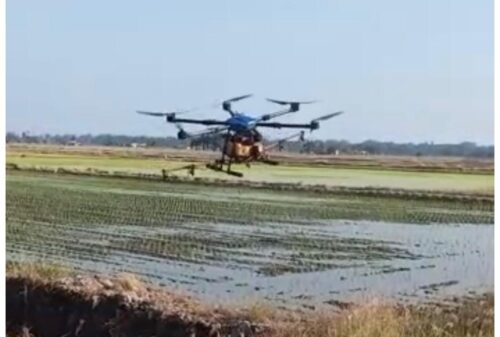
Can be applied using drones, keeping the water volume at 20 – 40 L per ha.
One application is sufficient for the entire crop duration.
Benefits are
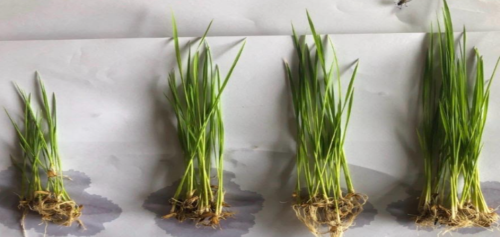
- Significantly higher number of productive tillers per plant or hill, more number of grains per panicle and ultimately significantly higher grain yield.
 |
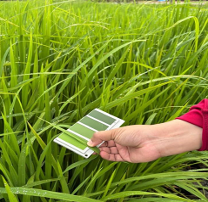 |
| Application of MycoRootSym Wonder at 2 Days after Transplanting | Leaf Color Measurement using Leaf Color Chart -optimum nutrient uptake |
|
|
|
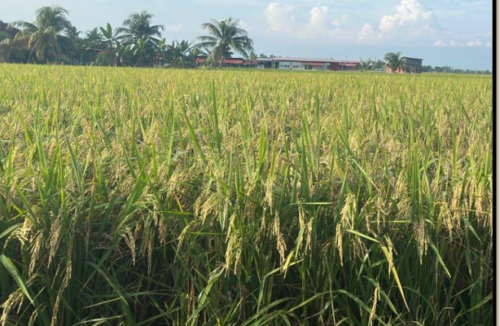
Plot trial picture before a week of harvest (First Season 2025) at Kuala Selangor |
OIL PALM:
At Nursery Stage- MYCOROOTSYM WONDER can be applied @ 0.5 g per polybag, within a week of
planting. It can be applied either as dry powder of by mixing in water. One application is sufficient during the entire nursery duration.
Benefits are
Main field:
– Better plant health, such as a greater number of plant roots and fronds.
– Bigger bole size
– Faster establishment in the field
– Better fertilizer and nutrient use efficiency
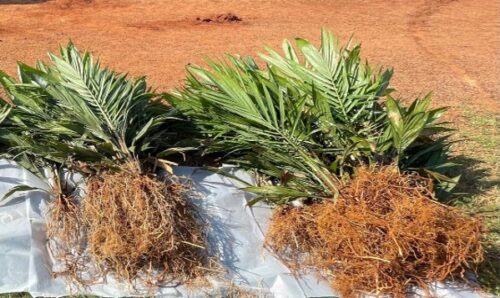
Some of the Benefits of using MYCOROOTSYM WONDER on oil palm as shown below.
|
OIL PALM SEEDLINGS GROWTH AFTER SIX MONTH OF PLANTING INTO THE POLYBAG
|
|
| A. Non Treated OP seedling showing lower root masses in the polybag | B. Treated with MYCOROOTSYM WONDER showing higher root masses in the polybag |
Fruits and vegetables:
- Applied @ 250 g per ha, by sufficiently mixing in water
Common FAQ:
- Can spores in MYCOROOTSYM WONDER survive in the soil forever?
– They cannot survive in barren soil. It needs live roots to survive. Mycorrhiza will not survive once the host plant/ roots die.
– Just one application is enough.
– Would be enough for short duration annual crops. But repeat applications may be needed for tree / perennial crops
|
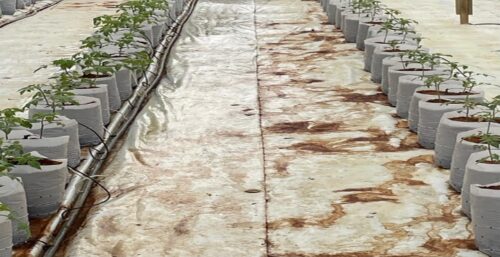
TOMATO PLANTS 3 WEEKS AFTER TRANSPLANTING INTO THE POLYBAG
|
||
| a. Treated with MYCOROOTSYM WONDER showing healthier plant growth | b. Non Treated tomato plants showing slower and unhealthy growth | |
|
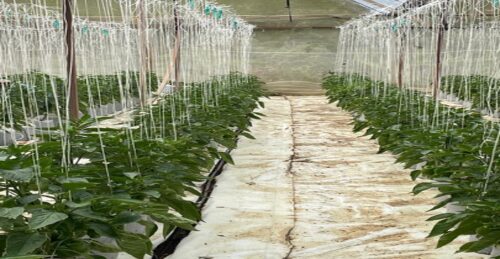
CAPSICUM BELL PEPPER PLANTS 5 WEEKS AFTER TRANSPLANTING INTO THE POLYBAG
|
||
| a. Treated with MYCOROOTSYM WONDER showing healthier plant growth | b. Non-reated plants showing slower growth | |
 |
 |
Common FAQ
Can spores in MYCOROOTSYM WONDER survive in the soil forever?
- They cannot survive in barren soil. It needs live roots to survive. Mycorrhiza will not survive once the host plant/ roots die.
Just one application is enough?
- Would be enogh for short duration annual crops. But repeat applications may be needed for tree / perennial crops.
Is it compatible with insecticides and fungicides?
- Most insecticides and fungicides are compatible. There are few exceptions.
Can we apply as foliar?
- No. Mycorrhiza has to reach the soil/ roots.
What is the ideal soil condition for Mycorrhiza to perform effectively?
- We can get good results in poor, stressed soils and soils low in available Phosphorous.
Can we mix with chemical fertilizers and apply?
- Yes. Can be mixed with N, P and K fertilizers.
How quickly can we see the effect of Mycorrhiza?
- Since Mycorrhiza has to colonize and grow on the roots, it may take 3/4 weeks to see the results and benefits. Response in the nursery will be faster than in established plants. But trees or tree nurseries would take a longer time.
Price Indication
For Oil Palm Nursery @ 1 g/plant
Cost per Plant- RM 0.12 per plant
Recommendation for other crops
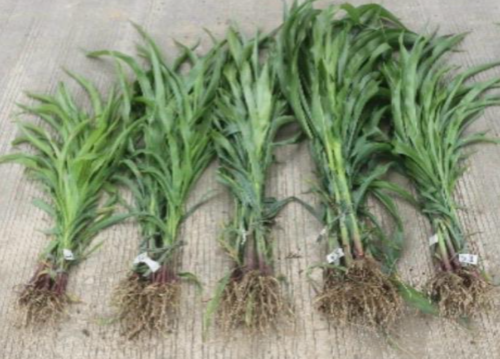
- Field crops (eg corn): 250g/ha
- Vegetables: 250g/ha
- Nursery and Polybags: 0.5g per plant
- Tree Crops : 0.5-1g per plant